Speaking Up for Chickens at the Market Days Festival
Winner of the Ninja Air fryer
New Hampshire Animal Rights League is pleased to share the news of our successful outreach efforts at the Market Days Festival in downtown Concord, NH.
During this three-day event (June 23- 25), we spread the word about the work we do for animals and answered the question: What’s Wrong with Eating Eggs?
Visitors to our booth learned that there is a great deal of suffering and death involved in the production of eggs. Whether raising caged or free-range chickens, it is standard practice in the egg industry to:
- Obtain hens from hatcheries that kill all male chicks at birth. (All American hatcheries kill male chicks.)
- Cut or burn off hens’ sensitive beaks to minimize how much they can damage themselves and others.
- Crowd “free-range” hens so densely most never find their way outside.
- Send hens to slaughter when their egg production decreases and the shells thin, around age 7-12 months.
Eye-Opening Video
We enticed approximately 200 people to watch the following 1-minute video from Farm Sanctuary founder Gene Baur answering the question, “What’s Wrong with Eggs?”
Those who watched the video received a free can of vegan cold brew coffee from RISE Brewing Co. along with some conversation about what they had seen.
“Male” Chick Toys
We gave out “male” chick toys to draw people in so we could tell them what happens to the male chicks at the hatcheries that supply hens to egg farms as well as backyard chicken keepers.
On the tag, we wrote, “I lived only hours, because I was male — I had no worth, since I would never lay eggs.”
We included a QR code (with warning label) that opens a video of chicks being dumped into a macerator.
Goodie Bags
We handed out close to 200 “goodie” bags containing vegan literature (sampling below), vegan protein cookies from Munk Pack, and meatless jerky from Primal Spirit Foods.
Brochure
We showed visitors some of our favorite egg substitutes and handed out a brochure with more information.The future is vegan
While much of the food at the festival was not vegan, encouragingly many vendors did offer a vegan option. Deadproof Pizza jokingly called theirs the “Obligatory Vegan Item.”
Free advertising space
On the backside of our tent, we displayed a heartbreaking illustration of speciesism drawn by friend of NHARL Holley Ackerson.
Thank you
Thank you to all our supporters and to everyone who stopped by to learn what’s wrong with eating eggs.
We hope to see you again next year!
Successful Outreach at NH SPCA PAWS Walk
New Hampshire Animal Rights League was on site at the NH SPCA’s annual PAWS Walk Fundraiser to answer the question: “What’s Wrong with Eating Eggs?”
Chickens make wonderful companions, and we encourage adopting birds from an animal shelter, such as the NH SPCA. But there are a number of problems with keeping chickens for the purpose of eating their eggs.
We explained to visitors that there is a great deal of suffering and death involved in producing eggs — even those from “free-range” farms, which are increasingly becoming the target of law suits for deceptive marketing.
- Obtain hens from hatcheries that kill all male chicks at birth. (All American hatcheries kill male chicks.)
- Cut or burn off hens’ sensitive beaks to minimize how much they can damage themselves and others.
- Crowd “free-range” hens so densely most never find their way outside.
- Send hens to slaughter when their egg production decreases and the shells thin, around age 7-12 months.
Overall, it was a very productive day for NHARL, with lots of meaningful conversations and a bunch of new names for our mailing list.
Letter: Using pandemic federal money for hatcheries is a misuse of funds
Letter to the Editor
The Conway Daily Sun
May 13, 2022
Using pandemic federal money for hatcheries is a misuse of funds
New Hampshire Fish and Game has a fish hatchery problem. It is being sued by the Conservation Law Foundation, an environmental advocacy organization, for polluting the Merrymeeting River with wastewater from its Powder Mill Fish Hatchery. According to Fish and Game, they cannot keep pollutant levels within EPA limits because the hatcheries, where staff raise millions of fish each year for “put and take” fishing, are old and in disrepair.
Despite taking in millions in fishing license revenue, which is matched by millions from the federal Sport Fishing Restoration Act of 1950, Fish and Game has somehow not managed to maintain and upgrade the hatcheries appropriately.
Recently, Fish and Game saw an opportunity to receive money for its polluting hatcheries in N.H.’s share of the federal American Rescue Plan Act funds. First, the department asked for and received $1 million in federal funds for a study to rebuild Powder Mill Hatchery. Then last month, they were back, asking for and receiving $55 million more to rebuild two other of the six state hatcheries.
Those in power think the unnatural process of farm-raised fishing is so important to New Hampshire that it warrants spending a huge chunk of pandemic recovery funding on it.
We each have an executive councilor who represents us and approved this expenditure. Express your outrage that N.H. fish hatcheries are getting money that should be used for pandemic relief. The hatcheries should be downsized or closed if license sales can’t pay for them.
LINDA DIONNE
Raymond
Successful Day at NH Fish & Game Event
New Hampshire Animal Rights League is delighted to share the news of our successful outreach efforts at NH Fish & Game’s Discover Wild NH Day held April 16 in Concord.
During this popular family event that attracts thousands, we spread a message of kindness toward mice and other “uninvited houseguests.”
Despite being stationed in a back corner, our tent attracted non-stop visitors, with people waiting in long lines to spin our “Save the Mouse” wheel.
Accomplishments
- Educated hundreds of people, young and old, about the cruelty of using glue traps and poison bait blocks.
- Sounded the alarm about the dangers rodent poisons pose to owls, foxes, bobcats, and other predators, who can become sick and die from consuming poisoned mice.
- Connected with fellow exhibitor NH Falconers in our shared desire to protect raptors from rodenticide poisoning. Wildlife rehabilitators have seen a dramatic increase in sick owls and other predators
- Donated books that encourage living in harmony with wildlife — The Humane Gardener and Nature’s Best Hope: A New Approach to Conservation That Starts in Your Yard — for the event-wide raffle.
Literature
We handed out copies of Are You Poisoning Pets and Wildlife? and our own brochure created for this event, Living with Our Wild Neighbors.
Eye-Catching Poster
We displayed the following eye-catching poster from Raptors Are the Solution (RATS) and discussed it with visitors to our booth.
Smart Mouse Trap Giveaway
We gave out more than 50 safe and humane Smart Mouse Traps and provided hands-on, personal instruction.
Postcard Campaign
We invited children and adults to sign or write postcards asking Walmart to stop selling glue traps and JP Pest Services to offer a more responsible approach to rodent control than indiscriminately littering the landscape with deadly poison.
Hundreds of postcards will be in the mail to Walmart and JP Pest Services. Photos of a few favorites are included below.
Mouse Toy Prizes
As a reward for sending a postcard, kids got to choose from an assortment of adorable catnip mouse toys. The mice were a huge hit, even in households without a cat!
Thank you to our volunteers and to everyone who stopped by to learn about the many reasons to be nice to mice.
After all, it’s their world, too.
Letter: Stop animal research
Letter in the Concord Monitor
February 23, 2022
Letter: Stop animal research
A month ago, a truck transporting a hundred macaque monkeys from NY to a quarantine facility in Florida was involved in a traffic accident. The monkeys, packed in wooden boxes, were thrown from the truck. Three escaped. Once found, the three were shot and killed by the police. How the other monkeys fared in the accident was not reported. The monkeys are from the island nation of Mauritius. They were going to a quarantine facility to pre-check for any diseases or viruses they might be carrying before being used for research. The officials who purchased the macaques have not released information about the monkeys that survived the accident. A passerby stopped at the accident out of concern. She looked in one of the boxes, later became ill, and was awaiting test results for monkey-borne diseases.
Have we learned nothing from COVID-19 and other animal-borne diseases that have jumped to humans, such as we also witnessed with Ebola? There are alternatives to using animals in research that are much safer and would cost the taxpayer less money. Imagine how much money it costs to purchase a hundred monkeys, fly them to the U.S. and then house and quarantine them for several months before possibly using them for research. It’s time to stop exploiting, confining, and in most cases torturing animals for research. We need to transition to only non-animal research. If we leave the animals alone, they will leave us alone.
LINDA DIONNE
Raymond
My Turn: Taking stock of NH’s fish hatcheries
Op-Ed in The Concord Monitor
December 26, 2021
My Turn: Taking stock of NH’s fish hatcheries
Every year, the New Hampshire Fish and Game Department raises more than a million fish in concrete tanks and ponds at six fish hatcheries they operate around the state.
Once the fish reach desired size, they are loaded into trucks and driven all over New Hampshire to be deposited into lakes, ponds, rivers and streams. Depending on where a particular water body is located and how easy it is to reach, fish may be pumped in through a tube attached to the tanker truck, hand-carried in nets or buckets, or even flown in by helicopter in some cases.
Fish stocking has been going on in New Hampshire in some form for more than a century. For those who grew up fishing here, the state’s annual stocking routine may seem normal. But for others, the idea of driving around putting fish into lakes and ponds (and this is not unique to New Hampshire) sounds crazy. The obvious question is, why is this necessary? Aren’t there already fish in the lakes, ponds and rivers?
The answer, according to NH Fish and Game Executive Director Scott Mason, is that the mineral makeup of New Hampshire’s water is such that it cannot support populations of fish big enough or plentiful enough to satisfy anglers.
But their solution, raising fish in hatcheries and then trucking them around to favorite fishing spots, is not without problems, and water pollution at the hatcheries is one of them.
When mass-producing animals in concentrated animal feeding operations (CAFOs), whether it’s pigs, chickens or in this case, fish, an inevitable side effect is an accumulation of animal waste. Dealing with this waste has been a thorn in the side of the NH Fish and Game for some time.
At the Powder Mill Fish Hatchery in New Durham, wastewater from the operation is discharged directly into the Merrymeeting River, and for years NH Fish and Game exceeded the pollutant levels allowed under its EPA permit. This contributed to harmful cyanobacteria blooms in the river and also landed NH Fish and Game in court.
Seeing an opportunity in the American Rescue Plan Act (ARPA) funds, NH Fish and Game recently asked for and was granted $1,000,000 from the recovery fund to address the water pollution problems at the fish hatcheries. The grant will be put toward the planning stages of building a wastewater treatment facility at the Powder Mill Fish Hatchery.
In other words, NH Fish and Game will use federal ARPA funds, which are intended to help states recover economically from the pandemic and build more resilient infrastructures, to solve its pollution problem— a problem that NH Fish and Game is wholly responsible for and should pay for out of its own budget.
There are also technical reasons to disqualify the project. While ARPA funds may indeed be used for “necessary investments in projects that improve wastewater and stormwater infrastructure,” the eligibility requirements, which are the same as for the existing Clean Water State Revolving Fund, state that assistance is available for projects to control “non-point sources” of pollution, whereas the fish hatcheries are “point-source” polluters.
As it is the mission of our organization to help animals, what troubles us most about the grant is not the misuse of funds but that it signifies a long-term commitment to the fish hatcheries and stocking program.
“Everyone understands that these definitely need major investments,” Governor Sununu told the Executive Council before they voted to approve the ARPA grant.
Fish stocking concerns us because the practice interferes with nature and raises animal welfare concerns.
A growing body of scientific evidence shows that fish not only experience pain but are also far more sophisticated creatures than once understood. Yet at the hatcheries, fish are crowded into barren tanks with nothing to do but swim in circles.
Once released into water bodies, hatchery fish may be ill-equipped to survive or alternatively may out-compete native fish for food. They may also bring with them diseases and/or parasites that fish raised in crowded conditions commonly endure.
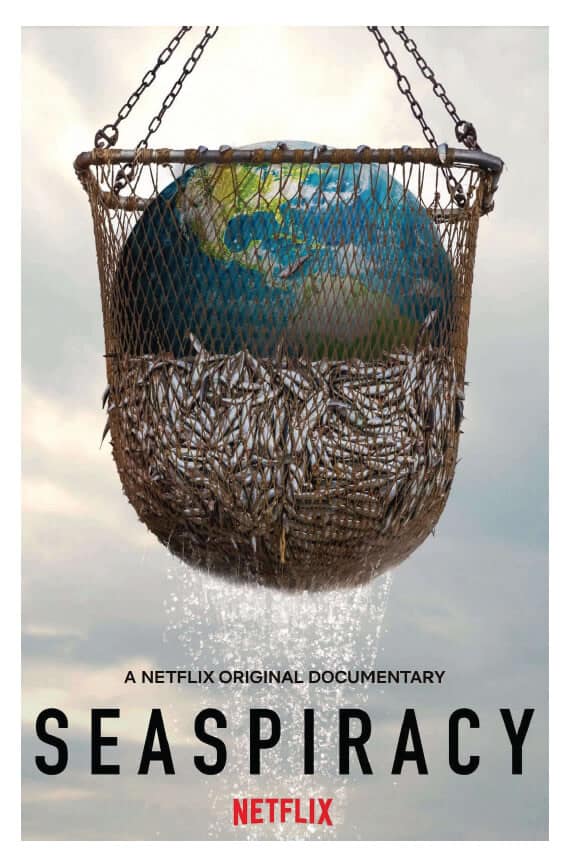
At a time when the public is learning there’s a lot more going on in the minds of fish than we might have realized (consider the popularity of documentaries like My Octopus Teacher and Seaspiracy) New Hampshire is planning a future where fish continue to be treated as expendable objects.
Instead of investing even more money in the fish hatcheries, NH Fish and Game should close them down and redirect the resources toward better managing the state’s water bodies to support native fish.
NH Fish and Game is already doing some of this work and could do more if the bulk of the inland fisheries budget weren’t going toward stocking. Where water bodies have been restored by removing dams to allow streams to run freely, for example, native fish populations have rebounded.
And in contrast to the merry-go-round of stocking, restoration projects are long-term, self-sustaining improvements that benefit not only native fish but also entire aquatic ecosystems.
(Joan O’Brien is a board member for New Hampshire Animal Rights League.)
NHARL Saves Two Thanksgiving Turkeys from Slaughter
On November 23, the New Hampshire Animal Rights League saved two turkeys at Charmingfare Farm from being slaughtered for Thanksgiving.
The Story
Back in October, a NHARL board member “reserved” a turkey at Charmingfare Farm. When Thanksgiving approached, there was form to complete, and customers were asked to enter the size turkey they wanted. The NHARL board member entered “0 lbs,” and included a note. She said that she’d had a “change of heart,” and asked if she could take her turkey home as a pet.
To their credit, Charmingfare Farm was willing to do it.
“We’ve never had a request like this before,” said the owner of Charmingfare Farm.
NHARL asked for two turkeys, so they would have companionship.
On pick-up day, NHARL waited in line along with all the people picking up dead birds. We conversed loudly about how excited we were to be taking our turkey home alive.
When we got to the counter, we thanked the owner and continued to draw attention to ourselves. We joked that since the Governor had not pardoned a turkey this year, we were pardoning two.
As we were led out to the barn, we heard someone in line say, “Good job,” and another remark, “Now I feel bad.”
The spared turkeys were waiting for us in a crate, right alongside folding tables lined with the bodies of their flockmates.
Our vehicle was strategically parked near the front door, so that when the turkeys were loaded in, it would happen in view of customers coming and going.
A curious little girl, headed to the car with her mother, wanted to see the live turkeys. We invited her to touch the turkey’s soft tail feathers. She was worried about where they were going. “We’re taking these turkeys to a sanctuary,” we said, “so they don’t have to die.”
Her mother looked on with a big smile, despite holding a shopping bag containing a dead bird.
Although Charmingfare Farm shows photos of heritage breed turkeys on their web site, the ones they sell at Thanksgiving are large-breed, “Broad-Breasted White” turkeys (referred to as “Industry” or “Commercial Turkeys”).
The plight of such turkeys includes being bred not for fitness and health, but for fast growth. Rapid growth contributes to a range of devastating health problems, especially leg and joint problems and heart failure. These turkeys aren’t designed for longevity and thus require specialized care. (The Open Sanctury Project is an excellent resource for animal care.)
The rescued turkeys are staying with a friend of NHARL’s for the near future but may go to a sanctuary if it is determined that this would be a better home.
NHARL Liberates Snapping Turtle After 24 Years in a Fish Tank
Update!
As of May 2025, Miękki the snapping turtle has been cleared for release back into the wild! While this is an unusual outcome for a turtle who spent many years in captivity, returning animals to their natural habitat is always the goal of responsible turtle rescue efforts when conditions allow. Good luck out there, Miękki!Imagine spending your entire life in solitary confinement, unable to move farther than a few feet in any direction, and never able see another member of your own species.
This was the bleak existence for a “pet” snapping turtle named Shelly who lived in a fish tank in Tilton, NH for 24 years.
Imagining what that turtle’s life must be like kept members of the NH Animal Rights League, and an outraged woman named Hillarie Goldstein, awake at night.
How Could This happen?
Shelly the turtle was taken from the wild as a hatchling by well-meaning but uninformed people who saw her attempting to cross a busy downtown intersection. Although their intentions were good, they made the mistake of keeping the turtle far beyond the time when she could have been safely released back into the wild.
In New Hampshire, it is perfectly legal to take a snapping turtle out of the wild and make it a pet. In fact, you are allowed to take up to two.
This surprises most people, who reasonably assume that taking an animal out of the wild and keeping it captive is illegal.
Turns out there are some animals you can take from the wild, and some that you can’t. Having exclusive control over all captive and noncaptive wildlife in the state, The NH Fish and Game Department makes the rules.
Wildlife Possession Laws in NH
Below is a glimpse into laws surrounding possession of wildlife species occurring in New Hampshire. See the NH Fish and Game Department for a complete list.
Species that cannot be possessed
Any animal classified as threatened, endangered, or of special concern at the federal or state level (e.g., Blanding’s turtles and Eastern hognose snakes).
Note: Although the average person cannot possess these animals, exhibitors can with a permit.
Species that Can Be Possessed
- Up to 5 of 13 different listed amphibians, such as spring peepers and red-spotted newts.
- Up to 2 of 9 different listed reptiles, such as snapping turtles and ring-necked snakes.
In spite of laws allowing limited possession of these species, the NH Fish & Game Department encourages people to “leave wildlife wild,” adding that, “Populations of some species, especially turtles, can be adversely affected by the removal of a small number of individuals.”
Life in a Tank
The people who took Shelly home became more and more attached to her as time passed. She also became somewhat of an “attraction,” as she was on display in the lobby of the family’s used auto parts store.
As Shelly grew, successively larger fish tanks were purchased each time she outgrew one. But no matter how big the tank, her living conditions bore no resemblance to a natural snapping turtle habitat.
For one, snapping turtles like to be hidden and will dig themselves into the mud. They can also stay out of water for up to two weeks and move surprisingly fast on land.
Someone Speaks Up
In 2016, Hillarie Goldstein visited the auto parts shop where Shelly was kept and was shocked by her captivity and living conditions. She expressed her concern to the owners, but they believed that they were taking good care of the turtle.
Hillarie also contacted the NH Fish and Game Department, assuming that what she had witnessed must be breaking some law or rule. Cursory welfare checks were performed, and it was determined that the turtle was not being mistreated.
But Hillarie was not deterred. She wrote a letter to the editor and got press coverage in local newspapers.
Despite the publicity, nothing changed for Shelly the turtle.
Press Coverage of Shelly the Turtle
- Giant snapping turtle in Tilton draws concern (Laconia Daily Sun, July 2016)
- Local business owner refutes accusations of animal cruelty (Minnisquam Echo, July 2016)
- Shel-he the snapping turtle deemed healthy (Laconia Daily Sun, April 2018)
- Turtle re-homed after 24 years at Camaro Heaven (Laconia Daily Sun, Sept 2021)
NH Animal Rights League Gets Involved
Still unwilling to give up trying to help Shelly, Hillarie contacted the NH Animal Rights League.
NHARL got involved immediately but ran into the same roadblocks: no laws were being broken, and the owners did not want to give up the turtle.
Nevertheless, NHARL continued to try and convince the owners that Shelly would be better off elsewhere, while at the same time searching for an appropriate home. Being large and long-lived, snapping turtles are difficult to place.
Releasing Shelly back into the wild was not an option. Even if she were able to adapt to the elements and find food, not having built up a resistance to disease and parasites meant she would likely perish.
A ChAnge of Heart
Years passed and the situation seemed hopeless. Then a new NHARL board member picked up the fight. In approaching Shelly’s captor, she found that he’d had a change of heart and now realized the turtle would be better off elsewhere.
With renewed purpose, NHARL contacted every obvious potential home in NH; then expanded the search to surrounding states.
A promising option at a Vermont farm sanctuary with a pond fell through at the last minute, due to that state’s stricter possession laws.
Then NHARL found the Turtle Rescue League, a licensed native turtle rehabilitation clinic in Southbridge, MA, co-founded by Alexxia Bell and Natasha Nowick.
The Turtle Rescue League agreed to take Shelly as a permanent resident, and NHARL agreed to provide the funding needed to build her a habitat.
A date was picked to make the transfer!
Liberation Day
On a beautiful September morning, NHARL board member Joan O’Brien met Alexxia Bell and Natasha Nowick of the Turtle Rescue League at the used auto parts store in Tilton, NH where Shelly had spent her first 24 years.
Board member Linda Dionne would be on the other end in Massachusetts to witness the turtle’s arrival at her new home.
The photos below document the events of the day.
Note that Shelly was given a new name that day, as is typical; otherwise, the Turtle Rescue League would have hundreds of turtles named “Shelly.”


Settling in to Her new home
These photos of Miękki (previously named Shelly) were taken on October 1, 2021 during an outdoor exercise session.
Her shell turns up at the bottom, when it should be rounded, because her diet was deficient in calcium. Lacking wild vegetation or other good sources of calcium, her body was forced to take the calcium it needed from her shell.
As you can see, Miękki still has some weight to lose. 🙂
Speaking Up for Farmed Animals at the Walk for the Animals
On Sep 19, New Hampshire Animal Rights League was on site at the Pope Memorial SPCA’s Walk for the Animals, a fundraiser including a 1-mile and 3-mile walk.
Surrounded by dogs, we spread the message that farmed animals are really no different from our companion animals. Cows and pigs are just as capable of feeling pain, grief, and joy — and they also want to run and play!
We displayed the following posters, to convey “Why love one and eat the other?”
Along with giving out information about all the good reasons to eat plants, not animals, we handed out WHIMZEES vegetable-based dental chews.